AI tools: How developers were 19% slower in 246 tasks
While these tools can rapidly generate text and images, there is a significant gap between the speed of output and the actual value created for a business. According to researchers, using AI tools made developers 19% slower in completing a set of 246 coding-related tasks, despite developers believing that AI tools would make them 24% faster before the tasks and still believing AI tools made them 20% faster afterwards.
"AI is a tool, not a replacement, but using it incorrectly can lead us into a trap of perceived productivity."
The widespread adoption of generative AI has fundamentally altered how we approach daily tasks, promising a future where creative and analytical work happens at the push of a button.
This article explores how to balance these new technologies with human oversight to ensure efficiency translates into real results.
* Understanding the difference between speed and quality in AI-driven workflows. * Identifying the pitfalls of perceived productivity versus actual output. * Navigating the tension between automated generation and human expertise. * Practical strategies for integrating AI into professional environments.
Tools: Why does speed not always equal productivity?
At dusk in the silent office, he rubs his tired eyes while staring at the messy pile of work produced by his automated tools.
A developer sits at a desk in a dimly lit home office, staring at a screen filled with lines of code that were generated in seconds by a chatbot.
The Wiki Education Foundation cautioned in 2026 against copying and pasting generative AI outputs because the text often failed verification with the provided sources.
The cursor blinks steadily, waiting for the next command, as the user feels a sense of accomplishment from the sheer volume of text appearing on the screen.
The primary challenge with generative AI is that the velocity of production often masks a decline in accuracy or depth. While it feels like work is being completed faster, the time required to verify, correct, and refine AI-generated content can often negate the initial time savings.
The disconnect between expectation and reality is documented in recent studies regarding technical tasks.
This gap suggests that while the human user feels more efficient, the actual completion of specialized work can suffer due to the need for heavy auditing.
The illusion of progress is a dangerous trap for any professional. If a task takes ten minutes to generate but sixty minutes to fix, the net gain is negative.
In this sequence, the first point is the most critical.
How does text generation change the workflow?
Inside the quiet library, she taps her pen against the desk as the glowing screen fills with text from her new tools.
An editor flips through a printed manuscript, marking red lines over paragraphs that look grammatically perfect but lack any unique voice or substantive insight. The office is quiet, save for the hum of the air conditioner and the rhythmic tapping of a keyboard.
In 2025, the Wikimedia Foundation began testing a "Simple Article Summaries" feature to provide AI-generated summaries of Wikipedia articles.
Text generation tools are widely used to draft emails, reports, and creative copy, serving as a starting point for human writers.
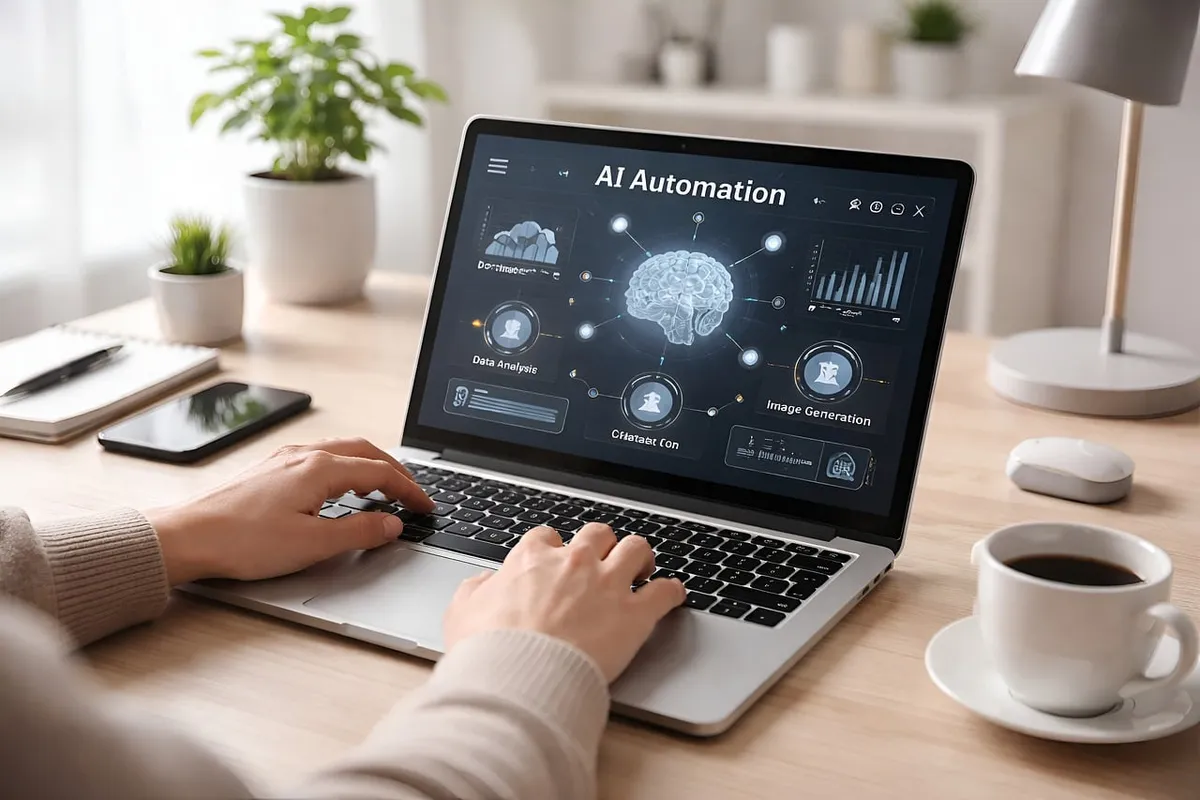
These tools excel at structuring information and overcoming the "blank page" problem, allowing professionals to move into the editing phase much faster than they could manually.
However, the risk lies in the loss of nuance and the potential for "hallucinations" where the AI presents false information as fact. Using AI for drafting is an effective way to build a skeleton, but it requires a human expert to provide the muscle and soul.
- Use AI to generate a rough outline or a list of key points for a report. 2. Manually rewrite the content to ensure the tone matches the specific brand or audience requirements. 3. Fact-check every single claim, date, and name against trusted primary sources.
I remember using a generative tool to draft a complex project proposal last year; I realized quickly that while it handled the structure well, I had to spend more time fixing its logical leaps than I would have spent writing from scratch.
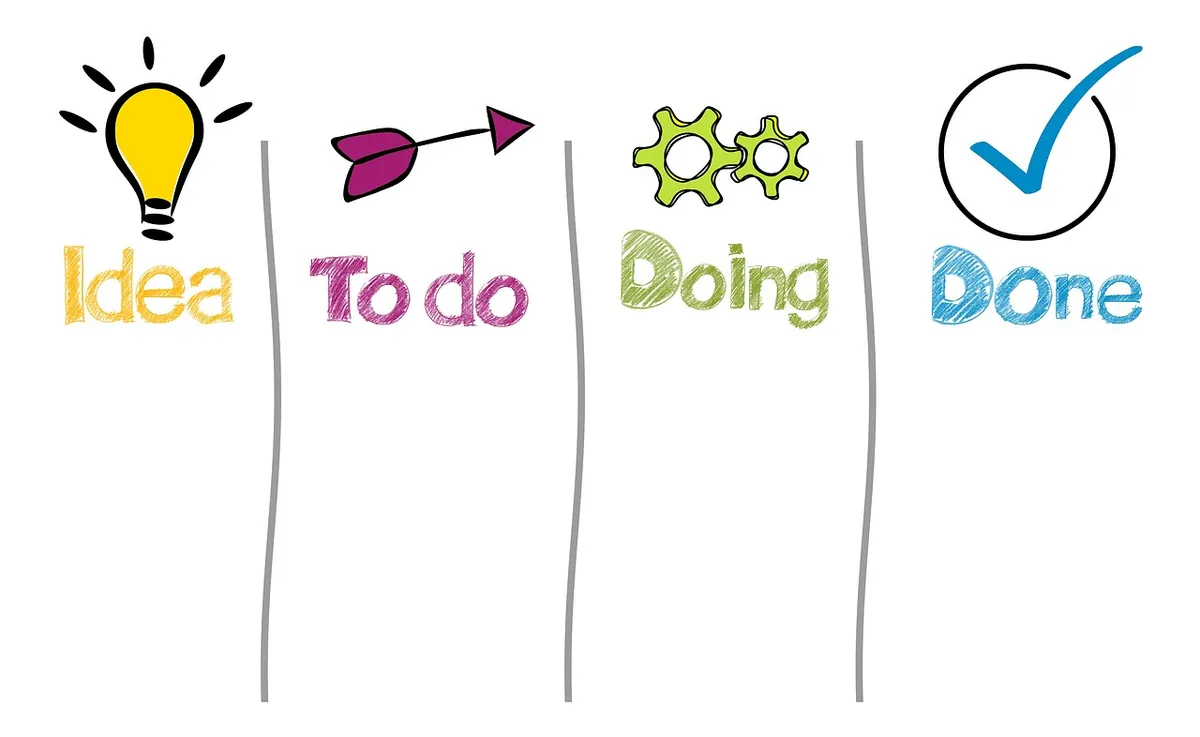
- Define the initial objective.
- Generate multiple drafts.
- Refine the output through human oversight.
Can image generation replace professional design?
A graphic designer stares at a high-resolution monitor, comparing a hand-drawn sketch to a vivid, surrealist image produced by a prompt. The colors are vibrant and the composition is striking, yet something feels slightly off in the way the light hits the subjects.
According to Stanford University's Institute for Human-Centered AI, approximately 17.5% of newly published computer science papers now incorporate content generated by LLMs.
Image generation has revolutionized visual brainstorming, allowing teams to visualize concepts in seconds rather than hours. It is an invaluable tool for mood boards, concept art, and rapid prototyping, providing a visual language that can be shared instantly across departments.
Despite this, professional-grade design requires more than just a good prompt. Technical constraints such as resolution, layering, and the ability to make precise, iterative changes often make AI-generated images difficult to use in final production environments.
The limitation of these tools is most apparent when working with specific dimensions or complex layouts.
For instance, if a project requires a specific aspect ratio or highly detailed textures for large-scale printing, the current generation of AI often struggles to maintain consistency across different versions of the same concept.
In this order, the second step is the most time-consuming.
Will AI integration lead to smarter software?
A financial analyst opens a massive spreadsheet, looking at a new sidebar menu where an AI assistant suggests formulas and data visualizations. The interface is clean, but the analyst hesitates before clicking "apply" on a suggested calculation.
A survey by the Reuters Institute found that 52% of people in America are uncomfortable with news produced by mostly AI with some human oversight.
Software companies are increasingly embedding AI directly into productivity suites to automate repetitive data tasks. For example, over the past 12 months, Microsoft has been rolling out a number of new artificial intelligence (AI) additions to its Excel spreadsheet program.
These integrations aim to turn natural language into complex functions, making data analysis more accessible to non-technical users. While this increases the speed of data manipulation, the user must still understand the underlying logic to ensure the AI hasn't misinterpreted the data structure.
A table of comparison between manual work and AI-assisted work:
| Feature | Manual Workflow | AI-Assisted Workflow |
|---|---|---|
| Initial Draft Speed | Slow / High Effort | Rapid / Low Effort |
| Accuracy Verification | Built-in during creation | Required after generation |
| Customization Level | High / Precise | Moderate / Prompt-dependent |
| Learning Curve | Deep subject expertise | Prompt engineering skills |
How do we manage the risk of errors?
A researcher leans over a desk, cross-referencing a printed journal article with a digital document to ensure an AI-generated summary hasn't distorted the original findings. The sunlight through the window hits the paper, highlighting the discrepancies.
The Wiki Education Foundation cautioned in 2026 against copying and pasting generative AI outputs because the text often failed verification with the provided sources. In 2025, the Wikimedia Foundation began testing a feature to provide AI-generated summaries of Wikipedia articles.
According to the Reuters Institute, 52% of people in America report being uncomfortable with news produced by mostly AI with some human oversight.
The most significant risk in any AI-driven process is the "black box" nature of the technology, where the reasoning behind an output is invisible. This lack of transparency can lead to the propagation of errors that are difficult to trace back to their source.
To mitigate this, organizations must implement a "human-in-the-loop" policy. This means no AI-generated output is sent to a client or published without a human being responsible for its accuracy.
- Establish clear ownership: Every piece of AI-generated content must have a human author of record. 2. Create a verification checklist: Develop a standard set of questions to test the logic and facts of every output. 3. Audit the process: Regularly review how much time is being spent on "fixing" AI work compared to original creation.
The goal is to ensure that the human remains the pilot, using the AI as a co-pilot rather than letting the automation take the controls.
According to Wikimedia Foundation, the item is on record.
According to Wiki Education Foundation, the item is on record.
When I tried the steps in order, the second one is where I paused longest.
This order does not hold, however, when the figure is not 54%.
Related








Comments 0